In My Opinion
Higher Ground: Movement Lawyering for Land Liberation
By Professor Veryl Pow

I encourage the current and next generation of movement lawyers to take on the work of liberating Mother Earth from the speculative market and returning it to stewardship of Indigenous communities, her first protectors. Drawing from my own movement lawyering experience at the Sustainable Economies Law Center, I offer reflections on why this work is not merely an ethical issue of reparations for the ongoing violence of settler colonialism, but can be deeply rehumanizing for the lawyers involved. In a profession known for high rates of substance abuse and suicide, rediscovering our humanity may be the only lasting antidote.
Land return work has catalyzed a healing journey for me. If we understand capitalism as an all-encompassing system that structures every facet of life, including the psychological, then there is much to unlearn. Ideologically, capitalism naturalizes the idea that human beings are separated from the natural world and from all living beings. This logic of alienation allows human beings to exert domination and desecration over sacred lands. If we can do that to Mother Earth, the provider of life, then we can exploit each other for financial gain.
For many years, I thought I could unlearn capitalist socializations through rigorous political study and commitment to activist lawyering. In other words, through engaging my mind and intellect alone. So, I studied how the law legitimates these separations through the construction of property, racialized and gendered regimes. For example, Pierson v. Post, a seemingly innocuous case that is a favorite for many 1L students taking property law, constructs the beach as wasteland and fox as a noxious pirate to be privately owned as commodities, not living entities with their own histories and autonomy. Similarly, straight out of law school, I dedicated my practice for the people, litigating against major insurance companies who preyed upon the racialized poor.
But as my knowledge and legal practice expanded, intuitively I felt something was missing. It wasn’t until I became involved in land liberation work that I discovered that the missing connection was to the web of life, and in turn, connection to myself — mind, body and spirit. I had become so heady through legal practice and academia that I lost my capacity to feel and love. The land has shown me that without liberating my whole self and without restoring my connections to Mother Earth and living beings, I will not be able to sustainably engage in liberation work for the long haul.
The land return work I’ve been involved with has included invitations from my Indigenous clients to gather on land and to sit in ceremony to deeply understand their ancestral connections to land and water. Receiving this honor has taught me deep humility and reverence to new cosmologies and ways of being that depart from the capitalist norms that even the most well-intentioned of movement lawyers often reproduce, such as the performance of mastery, egoism and impatience. Experiencing connection to land with my clients has transformed the traditional lawyer-client dynamics from transactional to relational and reciprocal and has sparked a personal commitment to liberate land.
Because of this transformative journey, I feel sad that for most social justice-oriented lawyers, the land is sidelined or completely absent. Liberating land is an issue of spatial sovereignty that makes it possible for communities to divest from the totalizing grip of capitalist relations and create a world anew because land provides us directly with an alternative means of social reproduction. As Malcolm X stated in no uncertain terms, “revolution is based on land. Land is the basis of all independence.”
In addition, there is a much more existential reason to engage in land liberation work. Endless resource accumulation has led humankind to the brink of ecological catastrophe that threatens the survival of our species over the next several generations. I have no doubt that Mother Earth will take care of herself, but if we are to survive as a species, then we must be good stewards of her, which is grounded in reciprocal ways of caring for each other — the land provides for us if we care for the land in non-ownership and non-extractive ways of growing and harvesting. In that vein, we have a lot to learn from Indigenous methods of stewardship, beginning with deep listening to the land.
Take, for example, lessons I’ve learned from my work with the Sogorea Te’ Land Trust (STLT), an intertribal, urban, Indigenous women-led land trust centered in Huchiun, the ancestral homeland of the Confederated Villages of Lisjan, now known as the East Bay, California. The STLT is working to rematriate Huchiun one parcel at a time. Rematriation is about restoring right relationships to land — first with First Nations and then with guests who have developed connections on the land. And through our knowledge of real estate, land use and tax law (among other areas), movement lawyers possess a mix of tools within our arsenal to support land back.
In rematriating the land, the STLT is healing the land through reintroduction of Indigenous stewardship methods to restore waterways and forests. They are also restoring desecrated shellmounds, which are burial sites and ceremonial grounds that have been flattened by capitalist development to become retail stores, amusement parks and residential developments. In 2024, the West Berkeley Shellmound, just one of 425 shellmounds throughout the East Bay that had been turned into a commercial parking lot, was rematriated.
Thus, when movement lawyers support land back, we not only help restore ancestral lands back to original stewards, but we are in turn healing ourselves and creating loving relations for generations to come.
About the Author
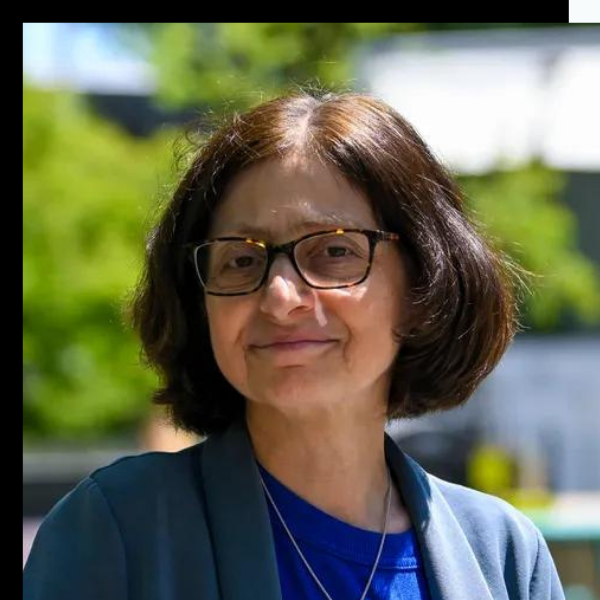
Associate Professor of Law and Architecture Veryl Pow is a movement lawyer who specializes in solidarity economics and land return. Professor Pow’s conception of movement lawyering was shaped by his time in Baltimore, where grassroots community members creatively and resiliently built urban farms, cooperatives and community land trusts in response to neoliberal conditions of disinvestment, immiseration and premature death.
Share
Related

Adjourn
Brigitte Amiri ’99 on what comes next in the fight for reproductive rights