Pedro Rios, director of the American Friends Service Committee’s US/Mexico Border Program, escorted Amy Grenier ’18 and Jennifer Ibañez Whitlock ’09 during a visit to the “Whiskey 8” open-air detention center near the San Ysidro border crossing.
Photographs by Matthew Furman
Defenders at the Wall
Graduates and students head to the border to challenge immigrant detentions.
BY TOMAS WEBER
Across the United States of America, a dramatic expansion in immigration law enforcement is reshaping communities and reigniting the national debate over immigration policy. While the steady flow of immigrants coming across the border has plummeted since January, detention numbers are climbing rapidly: there are now more than 55,000 people confined in immigration detention centers, compared to approximately 39,700 at the beginning of January. Many of the individuals arrested by Immigration and Customs Enforcement (ICE) in recent months were taken from their homes, workplaces and communities and incarcerated in facilities that are now reportedly reaching capacity, with increasing reports of unsanitary and inhumane conditions. Even for veteran immigrant rights attorneys, the numbers and conditions are overwhelming.
“We’re all vacillating between being stunned and furious, invigorated and exhausted,” says Ilana Greenstein ’98, deputy director and legal director at PAIR, an organization that provides free legal services to asylum seekers. “The volume of work has skyrocketed. People are terrified. Our clients are confused. The phones are ringing off the hook.”
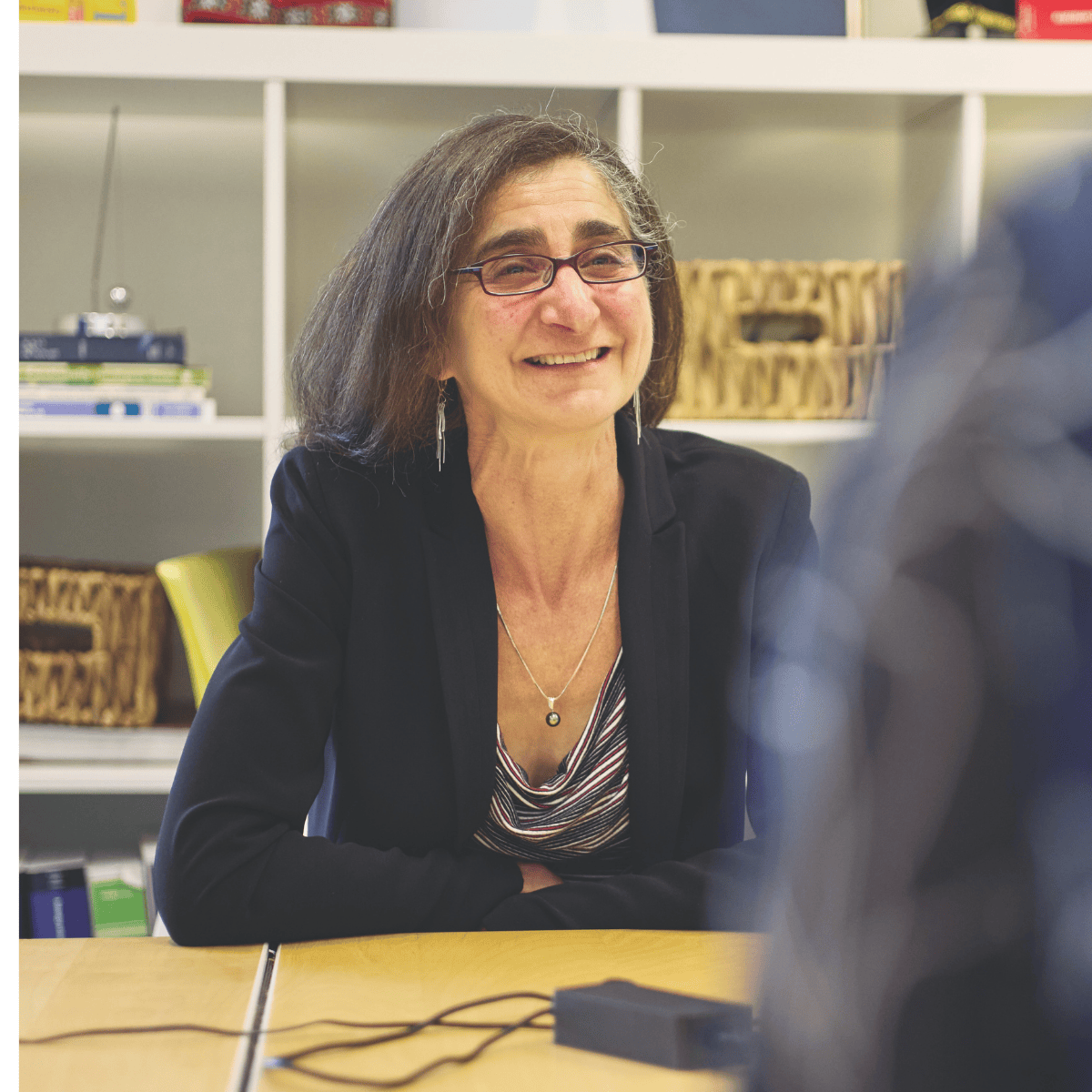
We’re all vacillating between being stunned and furious, invigorated and exhausted.
To meet the critical legal needs of those detained, Greenstein led a team of six students in Northeastern Law’s Immigrant Justice Clinic (IJC) to the US-Mexico border in March. There, at the Otay Mesa Detention Center outside of San Diego, students assisted attorneys at the Immigration Justice Project, a pro bono initiative of the American Bar Association’s Commission on Immigration. The students met with clients in brightly lit, windowless rooms, often interrupted by guards. They worked mainly on parole applications, to help those with ties to the United States return to their communities as their cases move through the system.
“It’s not jail; it’s civil confinement. But it feels exactly like a jail,” says Micah Slade ’27, who traveled to San Diego with Greenstein. “The detainees had jumpsuits on, and we were supervised the whole time by the guards.” Slade plans to enter the immigration field after graduation. “I’d done research beforehand,” he says, “but seeing the detention process in action informed how I plan on speaking with clients in the future who have been through this system.”
One pair of students had a client sign a G-28 form, which puts an attorney on record as the client’s representative. A few weeks later, that client was apprehended for deportation to El Salvador. “But because he had signed the G-28,” says Lindsay Nichols ’25, a clinic student on the trip who also plans a career in immigration law, “this pulled him out of the process and prevented him from getting summarily deported. So we had an immediate impact.”
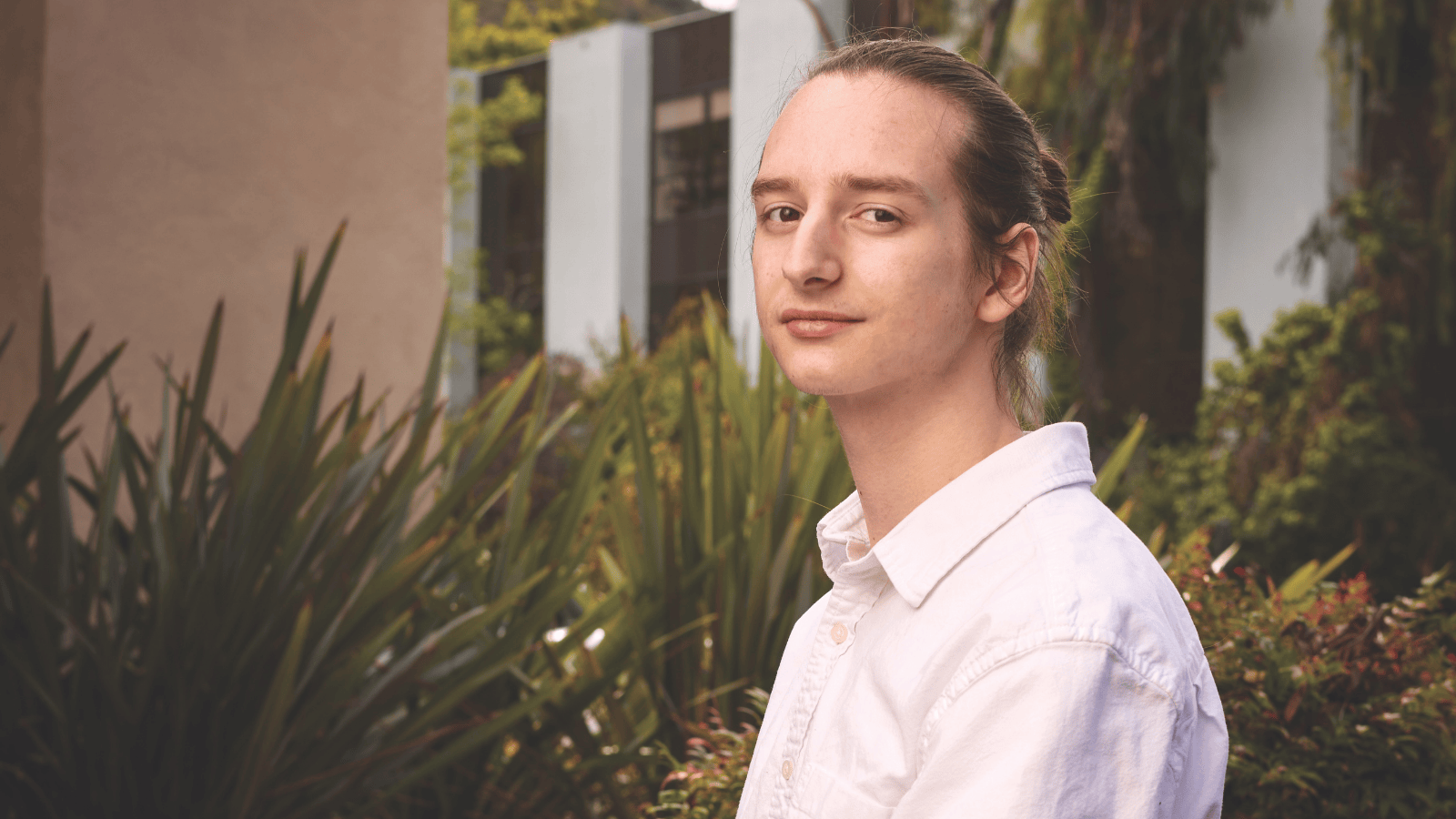
It’s not jail; it’s civil confinement. But it feels exactly like a jail.
Holding Crisis
The Northeastern Law donor-funded visit to San Diego was the IJC’s fourth trip to the southern border since the clinic was founded in 2019. Associate Dean for Academic and Faculty Affairs Hemanth Gundavaram leads the clinic with interim co-director and part-time law professor Anne Georges ’19. “Going to the border gives law students firsthand insight into the urgent, real-world challenges immigrants face — beyond what they see in the classroom or clinic. It sharpens their advocacy skills under pressure, deepens their empathy and reminds them that the law has human stakes. Immersing themselves in this frontline immigration work helps shape them into more grounded, responsive and effective lawyers,” explains Gundavaram.
“The trip definitely made me more emboldened to work with detained clients,” says Slade. “It’s terrifying to see the executive branch redefining due process without congressional approval, but I hope there will still be opportunities for detainees to get the representation to which they are entitled.”

CLOCKWISE FROM TOP LEFT: Jennifer Ibañez Whitlock ’09 (left) and Amy Grenier ’18 near the border in San Diego. The clinic team in San Diego included (back row, from left) Professor Ilana Greenstein ’98, Josie Davis ’26, Micah Slade ’27, Camila Clavijo ’27 and Serena Aimen ’27 and (front row, from left) Lindsay Nichols ’25, Ambreen Walji (managing attorney of the ABA Immigration Justice Project) and Claudia Ro ’26. Students researched client cases at the office of the ABA Immigration Justice Project. Professor Ilana Greenstein ’98 has previously led three student clinic trips to the border in Texas.
The number of detained migrants is likely to grow. The administration’s goal is to deport at least one million migrants in a year, and Executive Associate Director of Enforcement and Removal Operations Tom Homan in US Immigration and Customs Enforcement, known as the border czar, has advocated for doubling America’s detention capacity to 100,000 beds. With approximately $170 billion allocated to ICE in the “One Big Beautiful Bill,” including an additional $45 billion for building detention centers, Homan’s vision will likely be realized.
As the associate director of government relations at the nonpartisan American Immigration Lawyers Association (AILA) in Washington, DC, Amy Grenier ’18 has a bird’s-eye view of the shifting immigration landscape. “In late January,” she says, “I started seeing lots of emails from people who were, quite frankly, shocked that their clients had been taken into custody.” For immigration attorneys, assisting clients in detention is a challenging ordeal. It can mean traveling to centers across the country, from which detainees can be transferred at very short notice. Even when a lawyer can arrange a meeting with their client, the closely surveilled, stressful environment of detention tends to make migrants uncomfortable sharing their stories.
“You need to be able to convince your clients to trust you, often with the most challenging experiences of their lives,” says Grenier. “But not all the jails have dedicated attorney space, so sometimes you have to make the decision to have a critical conversation with your client in a pod where everyone can hear.”
The need for more immigration attorneys, says Grenier, is urgent and acute — and Northeastern students are answering the call. Many are driven by a compulsion to defend the rule of law on the front lines. But what does it mean to train future immigration attorneys in such a novel and hostile environment, in which the federal government appears to be violating the law?

We had an immediate impact — we didn’t just improve our legal training and experiences, but we also protected our clients and helped them stay in the US.
Lessons in Action
One answer, says Greenstein, is ensuring that students obtain solid experience working with detained clients and that they are introduced to working fast and efficiently, as detained cases tend to move quickly through the system. “You can sit and learn immigration law all you want and read the newspapers,” she says. “But the experience of going to the facilities and actually meeting with people and seeing the places we read about was, I think, an extraordinary one for the students.”
“The trip strongly reinforced my impression that the US is suffering from a huge immigration crisis, where we are punishing migrants who seek a better life by denying them real opportunities to gain immigration status and build a safe, secure life in our country,” says Nichols. “It was so apparent to me when visiting the border wall how much migrants risk and suffer just trying to get to the border, even when they know they likely won’t gain lawful status.”
For Grenier, too, visits to detention facilities and to the border are essential. Last fall, she and Jennifer Ibañez Whitlock ’09, then an AILA colleague and now a policy expert at the National Immigration Law Center, visited the “Whiskey 8” open-air detention center near the San Ysidro border crossing in San Diego, the busiest land crossing in the world.
“In Washington, it’s easy to think of the legal landscape like a chessboard,” says Grenier. “But it’s important for advocates who don’t work in direct services to take the time to physically go to these places that they’re writing, thinking about and advocating around.”
Grenier and Whitlock also went to Tijuana, where they spent time with several grassroots organizations that provide legal assistance to migrants. “We walked over the border and saw things that we only heard about back in DC — like the places where people who were waiting for their Customs and Border Protection appointment had to assemble and places where those who didn’t have an appointment had to wait,” says Grenier.
Gundavaram notes that students in the IJC often go on to careers in immigration law. “We are incredibly fortunate to have immigration attorneys and former students like Amy and Jen embodying the mission of our law school and leading the charge in Washington, DC, to push for thoughtful and compassionate immigration policies,” says Gundavaram. “In the ever-changing immigration field, Northeastern law graduates are making a profound impact, working tirelessly on the front lines to deliver essential legal support to people facing urgent challenges.”
Since Grenier and Whitlock’s trip, though, those challenges have grown ever more daunting. But one of the most powerful tools, says Whitlock, is keeping the receipts. Documenting every one of the administration’s harms and violations is crucial — “with the hope that, maybe,” she says, “we will get to a place where there might be, if not accountability, at least some sort of redress in individual cases.”
Grenier and Whitlock’s trip to the border in the fall was eye-opening — but for Whitlock, born in Guatemala, it was also personal. It was the first time she had been to the southern border as a US citizen. “I’m grateful my family didn’t have to come through under those conditions,” she says. But now, less than a year later, the immigration landscape has shifted yet again into something even harsher. “I feel that the border has now moved into our backyard,” explains Grenier. “It’s everywhere.”
About the Author
Tomas Weber is a reporter based in London, England.
Share

A portrait of former Massachusetts Senator William “Mo” Cowan ’94 painted by artist Sharman Altshuler now hangs in the Northeastern Law Library, honoring Cowan’s service as a US senator representing Massachusetts.
The Amy J. Reed Collaborative for Medical Device Safety recently mounted a multifront push to strengthen FDA oversight, transparency and patient safety in medical device regulation.

In Donte J. Carter v. United States, the DC Court of Appeals cited Professor Aliza Hochman Bloom’s Stanford Journal of Civil Rights & Civil Liberties article