Illustration by Tang Yau Hoong
Forces of Nature
Nature always finds a way. So do environmental lawyers.
BY JERI ZEDER
A glacier recedes.
On the newly exposed rock, lichen blooms and dies, decaying into soil that grows increasingly fertile as it sprouts first grasses, then trees, then forest. Sun filters through the forest canopy, speckling the earth below with microclimates, some inviting shade-loving life, others life that thrives in light and warmth. Where a tree falls, a cool, shady microclimate is suddenly blasted with sunshine; a habitat is destabilized, and the life that flourished there dies. In the habitat that replaces it, adapted life takes over. Nearby, beavers build a dam, transforming a stream into wetlands, killing a portion of the forest and birthing a pool for water lilies, herons and frogs.
Nature churns, environments change, and in a resilient ecological dynamic, life regroups, again and again. The government churns, too. From scrapping the Clean Air Act’s climate-guarding endangerment finding to reversing water protections, privileging polluters, cutting staff and abandoning the EPA’s public health mission, federal agencies are disrupting the environmental legal system. The impacts are becoming tangible: the Natural Resources Defense Council recently reported a sudden rise in coal pollutants attributable to the federal administration’s policies. Yet, like the Earth they have devoted their careers to defending, members of Northeastern’s environmental law community excel at transforming destructive setbacks into potent opportunities.
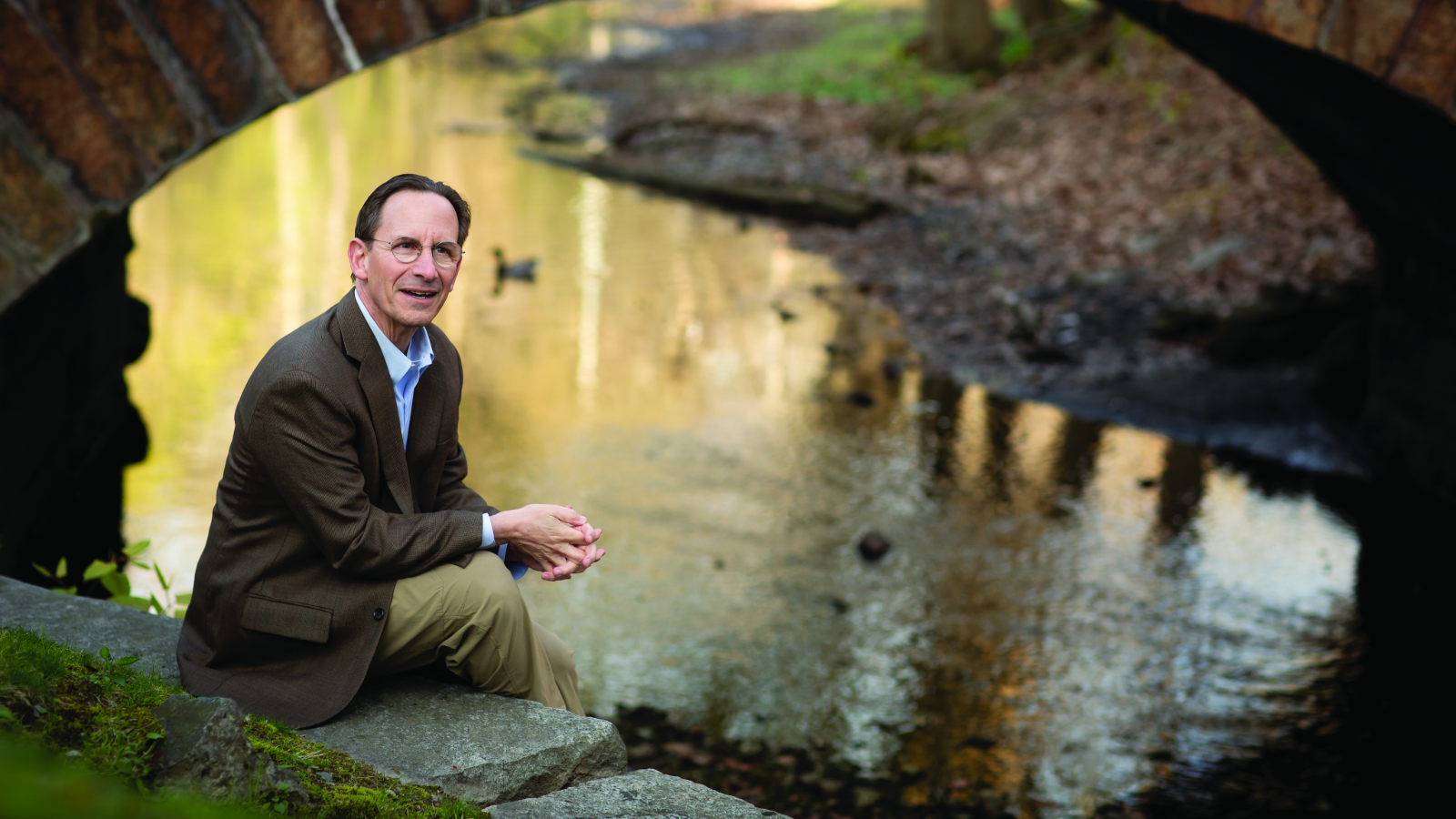
“We’re in it for the long game,” says John Rumpler ’96, clean water director and senior attorney at the nonprofit Environment America, a network of dozens of state-based environmental groups. While Rumpler says their most important venues are the court of public opinion and state legislatures, he and his team also deploy litigation. Filling the enforcement vacuum left by the federal administration, Rumpler and his team are leveraging the citizen enforcement powers granted in the Clean Air and Clean Water Acts by, for example, suing Campbell Soup for dumping waste into Ohio’s Maumee River. So far, they’ve gotten the company to admit to major environmental violations. They’re also suing the EPA for failing to update its rules on curbing water pollutants from slaughterhouse plants.
The Supreme Court’s environmentally unfavorable 2023 Sackett v. EPA ruling, combined with a proposed EPA rollback, would leave some 80 percent of America’s wetlands unprotected by the Clean Water Act, according to Rumpler. In response, Environment America is working to pass wetlands protection legislation at the state level. It’s also working for state restrictions (most recently in New Jersey) on toxic PFAS, known as forever chemicals, and it has state campaigns underway to curb microplastics, sewage pollution and lead in drinking water. Rumpler says he and his team pick issues where there is strong potential to win “hearts and minds,” regardless of political tribe or affiliation. After Environment America published a report documenting fecal contamination at beaches across the nation, Congress reversed its plans to cut funding for water infrastructure.
“I would be doing these things under the Biden administration, under the Obama administration, under any administration,” Rumpler says. “Our overarching strategy for the protection of the environment will continue to play out well beyond the Trump administration, no matter who is in office.”
Photograph by Kathleen Dooher
Our overarching strategy for the protection of the environment will continue to play out well beyond the Trump administration, no
matter who is in office.
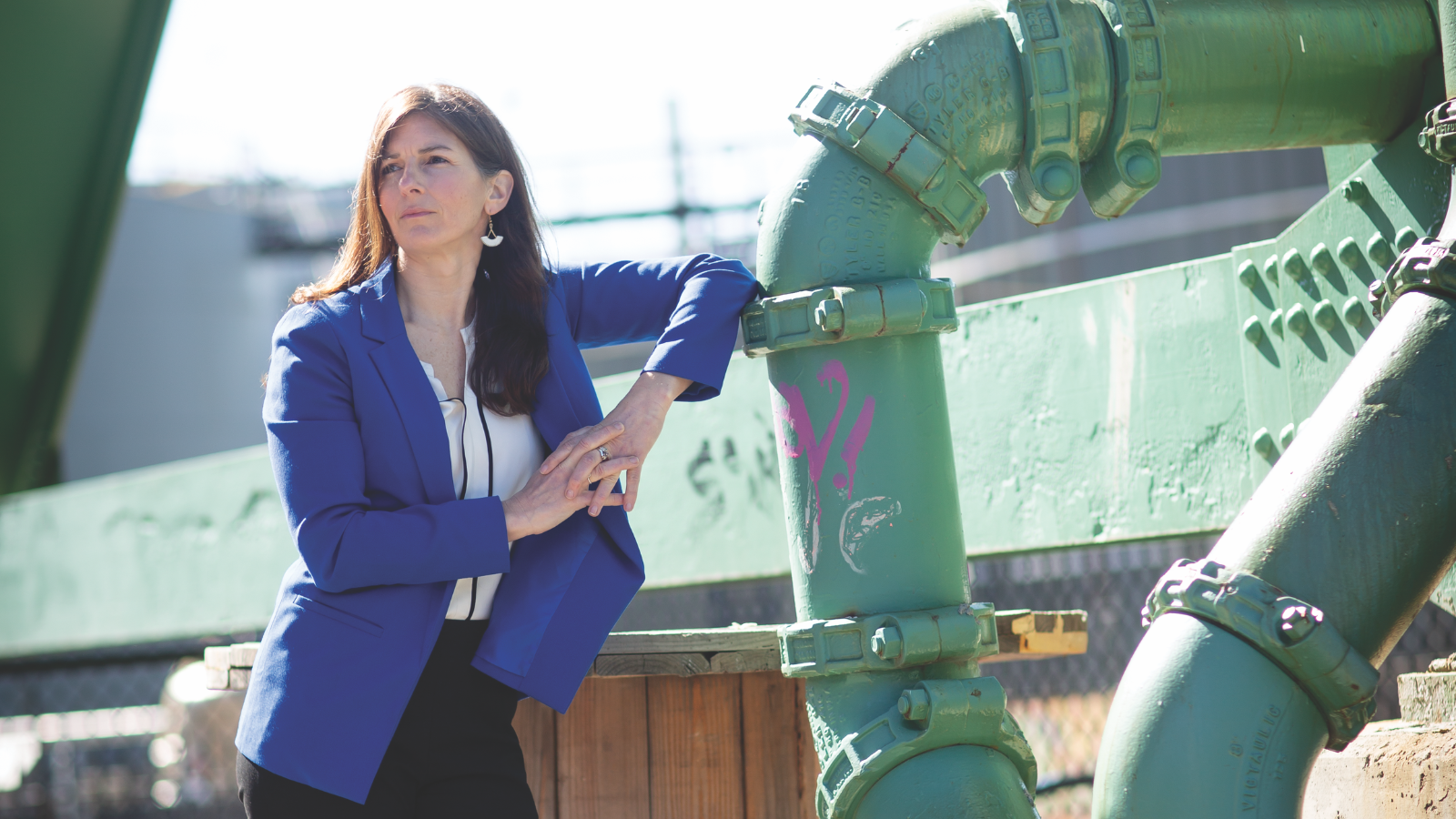
That same long-game thinking animates the work of Hilary Franz ’97, president and CEO of American Forests. Franz has spent her entire career in the field — as an environmental attorney, then as Washington state’s elected commissioner of public lands, where she managed 6 million acres, led the state’s wildfire response and restored one million acres of forest while keeping 95 percent of wildfires to 10 acres or fewer. She took the helm of American Forests in 2025 at a critical moment: More than 200 million acres of US forests are dead or dying, over 167 million acres need reforestation and urban communities face dangerous heat from a rapidly changing climate and a loss of tree canopy. “The health of our forests has been declining rapidly,” she says.
Franz’s response to the current federal disruption — including the reorganization of the US Forest Service — is to reframe it as an opening. “We have an opportunity and an obligation to rethink how we work together,” she says. Her model is wildfire response, where federal, state, tribal and private partners mobilize as one to save lives and landscapes. Forest restoration, she argues, demands that same urgency and collaboration. American Forests is now pursuing that vision across 45 states and 34 National Forests. “We have been successful only because we came together, working across boundaries and sectors.
Protecting America’s forests requires that same all lands, all hands approach today.”
Photograph by Kathleen Dooher
We need to stand firm. Any backing down or negotiating and potentially losing an edge on some environmental protections is retreating from the cleaner and healthier future we want and need.
Strategic Stewardship
At the New England–based Conservation Law Foundation (CLF), the determination of Heather Govern ’13, vice president for CLF’s Clean Air and Water Program, is palpable. “We need to stand firm,” she says. “Any backing down or negotiating and potentially losing an edge on some environmental protections is retreating from the cleaner and healthier future we want and need.” With a coalition of health and environmental advocacy groups, CLF has sued the EPA for dropping both the endangerment finding, which established that six greenhouse gases threaten public health and welfare, and its commitment to regulate vehicular carbon emissions. CLF was a contributor to an amicus brief in a lawsuit that ended the Trump administration’s moratorium on offshore wind. In Maine, CLF recently won an environmental justice case in state court, protecting the public health of the Penobscot Nation from a planned landfill expansion.
CLF’s state strategy includes pushing for climate superfund legislation that allows states to require fossil fuel companies to pay for state projects necessitated by climate change. For example, Govern’s colleague CLF senior attorney Jennifer Rushlow ’07 reports that the federal administration and the oil industry are suing to overturn Vermont’s climate superfund law; CLF is intervening on the side of Vermont to ensure that certain large fossil fuel companies pay their fair share of the costs communities are already facing to prepare for and bolster themselves against more severe weather and climate impacts.
Rushlow is also involved in the coalition lawsuit opposing the rescission of the endangerment finding, which will take a deep dive into the record behind the EPA’s decision revoking the science-backed determination that planet-warming emissions are dangerous and require federal regulation, including a review of public comments submitted to the agency. “Comments that were filed in that administrative process are critical,” Rushlow says.
Among the 350,000 public comments is one filed under the leadership of Annabel Shu ’26. When Professor Sharmila Murthy, faculty co-director of the law school’s Center for Public Interest Advocacy and Collaboration (CPIAC), invited her environmental law class to join her in drafting public comments on the proposed withdrawal of the endangerment finding, Shu and her classmate Emily Ganem ’26 jumped on board. They organized a “comment party,” where a dozen students gathered for a student-led tutorial on federal rulemaking and the scientific and legal bases for the endangerment finding.
“We were talking about things like: What are the implications for public health? What does this deregulation mean?” says Shu, who recently received Northeastern University’s 2026 Outstanding Professional Doctorate Student Award in Community Impact. Several students wrote their own comments, while others, along with a number of professors and graduates, signed on to the comment researched and drafted by Shu and Ganem.
Murthy herself is an environmental defender, advising environmental and civil rights groups, co-authoring public comments opposing harmful federal rulemaking proposals, and raising public awareness through blogs and opinion pieces. During the Biden administration, Murthy served as director for environmental justice at the White House Council on Environmental Quality.
Last year, Murthy co-founded Northeastern’s Law and Policy Fellows Program, sponsored by CPIAC and the School of Public Policy and Urban Affairs, to provide support and community for former high-level government service leaders. Murthy explains: “The idea was: Might they be interested in sharing their experiences and enriching the academic community of Northeastern, and might we be able to support them as they are thinking about their next steps?” The program has been a resounding success. The nine fellows have advised students, guest lectured in classes and participated in roundtable discussions about the meaning of public service.
One of those veteran legal experts is Christine Stoneman. As a lawyer with the US Department of Justice for 25 years, she led the Civil Rights Division’s Federal Coordination and Compliance Section, where a portion of her work involved enforcing civil rights laws in an environmental justice context. She opted for early retirement in 2025. She has guest lectured in Murthy’s environmental law class and mentored and advised students. The fellowship, she says, “has really given me the space to figure out my next chapter,” helping her decide to form her own consulting firm for legal aid and nonprofit organizations. She is also teaching part time at Northeastern Law. “I’ve had a really wonderful career,” she says. “I want to make sure that the next generation is interested in public service.”
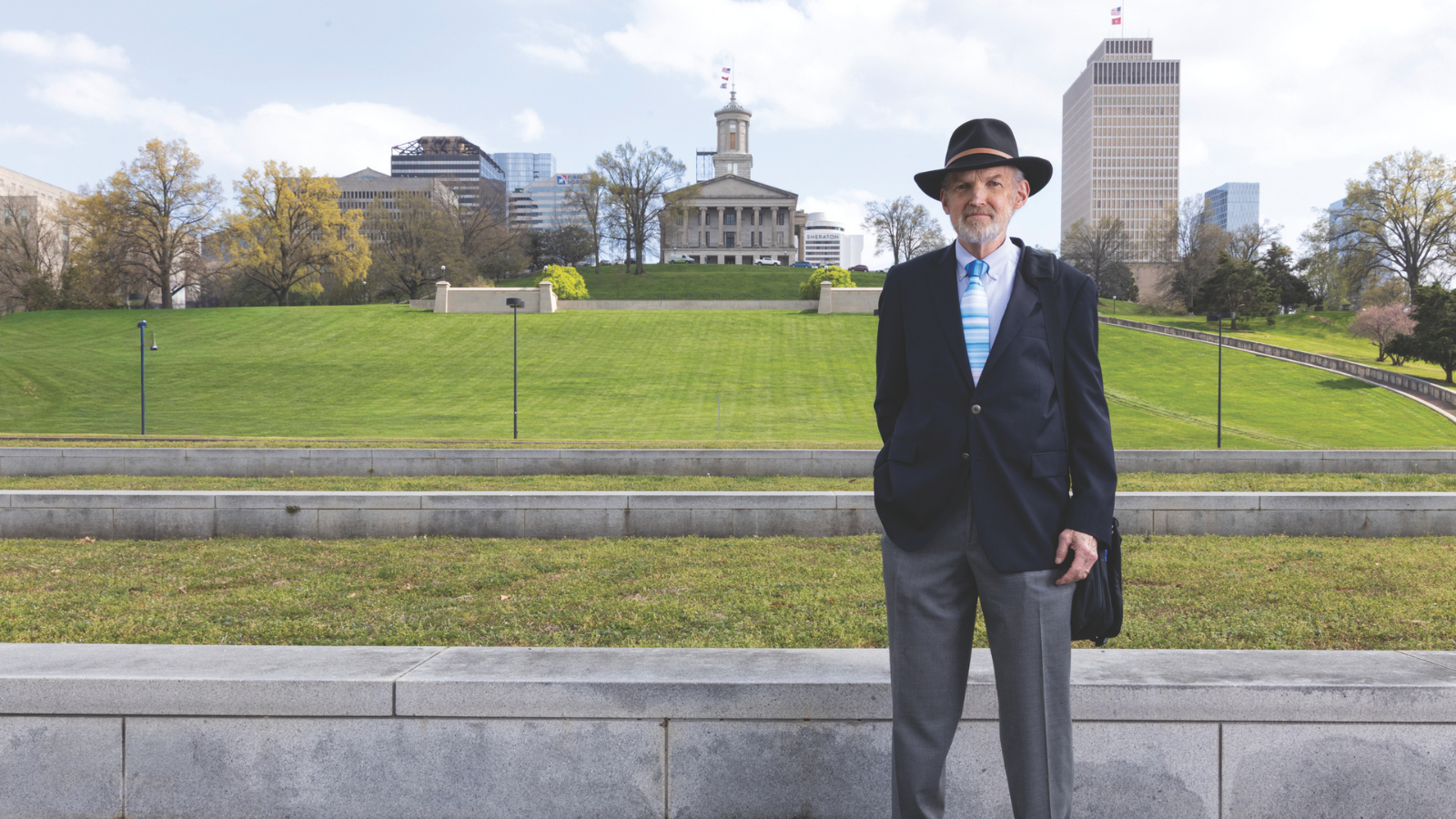
Despite the federal government’s retreat, Alan Leiserson ’80 still sees pathways ahead. Now retired from a 30-year legal career with the Tennessee Department of Environment and Conservation, Leiserson is an active volunteer state coordinator for Citizens’ Climate Lobby (CCL) in Tennessee, teaching everyday people the skills they need to advocate for effective climate action in Congress. “CCL does a great job of education and support for our volunteers,” says Leiserson. “As people get information and practice advocacy skills, they find they can do things like talk to a member of Congress. And that’s incredibly empowering.”
Photograph by Kris D’Amico
As people get information and practice advocacy skills, they find they can do things like talk to a member of Congress. And that’s incredibly empowering.”
CCL takes a bipartisan approach, channeling its efforts into lobbying for legislation it supports, rather than trying to block legislation it might oppose.
The organization recently succeeded in helping slip language from the bipartisan PROVE IT Act into an appropriations bill that the president signed into law in January. The language directs the National Energy Technology Laboratory of the US Department of Energy to study and report on how the carbon intensity of US-manufactured goods compares to that of goods from other countries.
Pushing Through
Over in the private sector, Jonathan Klavens ’93 is the founder and principal of the Boston firm Klavens Law Group, which serves developers, businesses, nonprofits, government agencies and municipalities in their efforts to develop and finance a variety of clean energy projects. “There’s definitely some gloom and doom,” he says, “but also some sunshine coming through the clouds.” The gloom-and-doom list includes legislation rolling back federal clean energy incentives, the cutting of $27 billion in funding for clean energy and climate projects in underserved communities, and layers of new federal red tape for certain wind and solar projects.
Where’s the sunshine? Klavens says the federal rollback of clean energy tax incentives, with its tightened construction timelines, has accelerated the development of new projects in the short term. “We’ve been busy helping clients do what they need to do to get their projects qualified before the curtain falls,” he explains. His clients are also developing battery storage projects, which are still eligible for tax credits. Meanwhile, the skyrocketing electricity prices caused by increased electricity demand and abetted by the federal administration’s suppression of clean energy development may incentivize deployment of green energy and energy efficiency projects.
Many states have robust policies to promote clean energy, Klavens notes. “Massachusetts, for example, has a very pro–clean energy governor in Northeastern grad Maura Healey [’98], and Massachusetts has been a continued supporter of clean energy development,” he says. Among the leaders shaping the Healey administration’s environmental policies are Climate Chief Melissa Hoffer ’98 and Department of Public Utilities Commissioner Staci Rubin ’10.
On Beacon Hill, Massachusetts Senate President Karen Spilka ’80; Senator Becca Rausch ’04, chair of the Joint Committee on the Environment and Natural Resources; and Representative Tram Nguyen ’13, chair of the House Committee on Climate Action and Sustainability, have been consistent champions for climate action in the state, including landmark climate legislation passed in 2024 and signed by Healey.
On the West Coast, California Secretary for Environmental Protection Yana Garcia ’11 leads the massive California Environmental Protection Agency, guiding more than 8,000 employees and a $5.6 billion budget focused on reducing emissions to achieve the state’s air quality and climate goals, restoring ecosystems and watersheds, and delivering safe drinking water. “We’re very proud of the progress we’ve made in California,”says Garcia. “One of the things we’re most proud of is that we’ve proven we can grow our economy while we reduce pollution. California’s greenhouse gas emissions are down 21 percent since the year 2000, while
our economy across the state has grown 81 percent in that same period.”

Photograph by Kevin Fiscus
We are very proud of the progress we’ve made in California. One of the things we’re most proud of is that we’ve proven we can grow our economy while we reduce pollution.”
As Garcia often says, we have only one planet. Federal environmental protections are in retreat, but the committed lawyers, government officials, academics and students in Northeastern Law’s environmental law community are not only standing firm; they are also making progress. Like the natural world, which always adapts in the face of disruption, they are finding ways — over, under, around and through. They’re notching up wins. And they’re not giving up, because they know that every forest, shoreline and breath of clean air hangs in the balance.
Pushing Through
Over in the private sector, Jonathan Klavens ’93 is the founder and principal of the Boston firm Klavens Law Group, which serves developers, businesses, nonprofits, government agencies and municipalities in their efforts to develop and finance a variety of clean energy projects. “There’s definitely some gloom and doom,” he says, “but also some sunshine coming through the clouds.” The gloom-and-doom list includes legislation rolling back federal clean energy incentives, the cutting of $27 billion in funding for clean energy and climate projects in underserved communities, and layers of new federal red tape for certain wind and solar projects.
Where’s the sunshine? Klavens says the federal rollback of clean energy tax incentives, with its tightened construction timelines, has accelerated the development of new projects in the short term. “We’ve been busy helping clients do what they need to do to get their projects qualified before the curtain falls,” he explains. His clients are also developing battery storage projects, which are still eligible for tax credits. Meanwhile, the skyrocketing electricity prices caused by increased electricity demand and abetted by the federal administration’s suppression of clean energy development may incentivize deployment of green energy and energy efficiency projects.
Many states have robust policies to promote clean energy, Klavens notes. “Massachusetts, for example, has a very pro–clean energy governor in Northeastern grad Maura Healey [’98], and Massachusetts has been a continued supporter of clean energy development,” he says. Among the leaders shaping the Healey administration’s environmental policies are Climate Chief Melissa Hoffer ’98 and Department of Public Utilities Commissioner Staci Rubin ’10.
On Beacon Hill, Massachusetts Senate President Karen Spilka ’80; Senator Becca Rausch ’04, chair of the Joint Committee on the Environment and Natural Resources; and Representative Tram Nguyen ’13, chair of the House Committee on Climate Action and Sustainability, have been consistent champions for climate action in the state, including landmark climate legislation passed in 2024 and signed by Healey.
On the West Coast, California Secretary for Environmental Protection Yana Garcia ’11 leads the massive California Environmental Protection Agency, guiding more than 8,000 employees and a $5.6 billion budget focused on reducing emissions to achieve the state’s air quality and climate goals, restoring ecosystems and watersheds, and delivering safe drinking water. “We’re very proud of the progress we’ve made in California,”says Garcia. “One of the things we’re most proud of is that we’ve proven we can grow our economy while we reduce pollution. California’s greenhouse gas emissions are down 21 percent since the year 2000, while our economy across the state has grown 81 percent in that same period.”
About the Author
Jeri Zeder is a contributing writer.
Share
In 2022, after a 30-year career in business immigration law, Ditrani founded Pathway for Immigrant Workers, a nonprofit built on a simple premise: do the work for nothing.

Professor Claudia Haupt, a nationally recognized expert on First Amendment law at the intersection of free speech, health and technology, has been appointed faculty co-director of Northeastern Law’s Center for Health Policy and Law.

Northeastern Law’s Center for Public Interest Advocacy and Collaboration (CPIAC) launched a Visiting Fellowship Program in 2025–2026