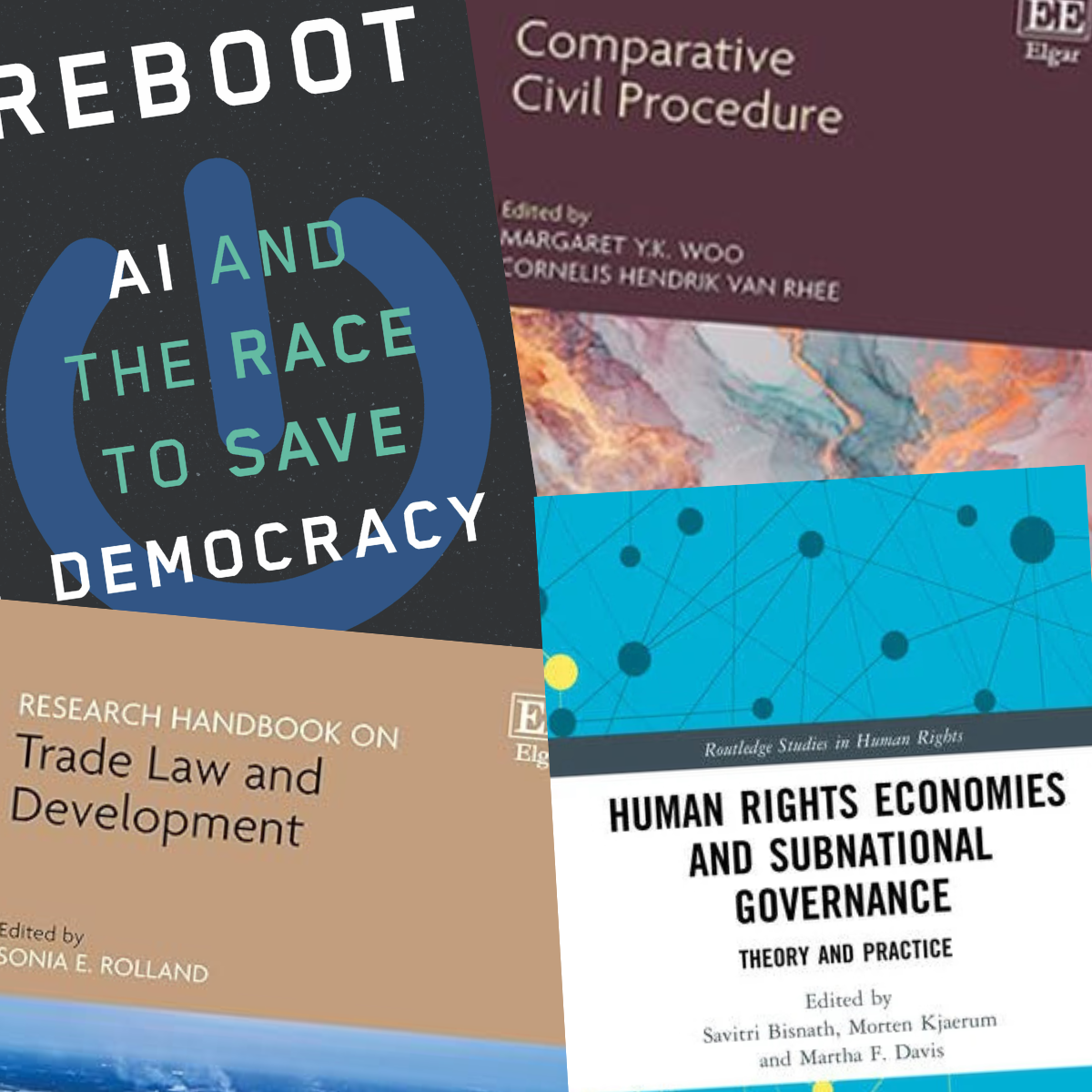
Faculty Books
See what our faculty are arguing about now … in these insightful new books.
Start at Home
 As cities and subnational regions gain economic and political power, Human Rights Economies and Subnational Governance (Routledge, 2026), co-edited by Professor Martha Davis, provides a crucial examination of economic policies grounded in human rights principles and obligations — implemented in the places people live. Proposing ways in which local economic policies can respect, protect and fulfil human rights, with positive multiplier effects at the national and global levels, the book was featured in February at UNESCO’s virtual conference, Human Rights Go Local: What Works. “Human rights efforts often focus on nation-states, but local implementation is critical. This book provides a road map for local governments, advocates and scholars working to fully integrate human rights at the local and community level,” said Davis, faculty co-director of the Center for Global Law and Justice.
Trade Winds
 Research Handbook on Trade Law and Development (Edward Elgar Publishing, 2025), edited by Professor Sonia E. Rolland, brings together global experts on trade governance, sustainability, food security, intellectual property, industrial policy and the digital economy, featuring case studies from across Africa, the Americas and Asia. “I wanted this book to take a different approach and focus on how trade rules affect individuals and groups, such as women and Indigenous peoples, businesses large and small, local governments and central governments in emerging countries,” said Rolland, who has published widely in English and French on sustainable development in international economic law. “Conversely, the book also shows how each of these constituencies can and does influence the making of trade law and how trade governance can be designed to address their needs.”
Rebooting the Republic
 At a time when trust in both government and artificial intelligence is declining, Professor Beth Simone Noveck argues that democracy itself must become a focus of innovation. In her new book, Reboot: AI and the Race to Save Democracy (Yale University Press, 2026), she makes the case that if democracy is to survive the AI era, we must treat democratic renewal as a grand challenge, demanding the same ambition and investment devoted to space exploration, climate science and medical discovery. According to Noveck, who directs the Burnes Center for Social Change and the Governance Lab at Northeastern and previously advised the White House, 10 Downing Street and the German Chancellery on technology and governance, “We have built extraordinary tools without yet using them where they are needed most: to forge institutions that listen more closely, decide more wisely and act more effectively. We stand at an inflection point. Will AI tighten the grip of power—or help rebuild public institutions that work for people?”
Order in the Court
 Comparative Civil Procedure (Edward Elgar Publishing, 2025), co-edited by Professor Margaret Y.K. Woo and Professor Cornelis van Rhee of Maastricht University, brings together leading legal scholars from across the globe to examine how civil disputes unfold in different legal systems — tracing the full arc of litigation, from the filing of an initial complaint to the enforcement of a final judgment, across legal traditions spanning Asia, Europe and the Americas. Part of Edward Elgar’s Research Handbooks in Comparative Law series, the volume reveals both striking contrasts and unexpected common ground in how courts around the world handle real-world disputes. “A global understanding of civil justice systems and their potential is essential to preserving the rule of law,” said Woo.
Share
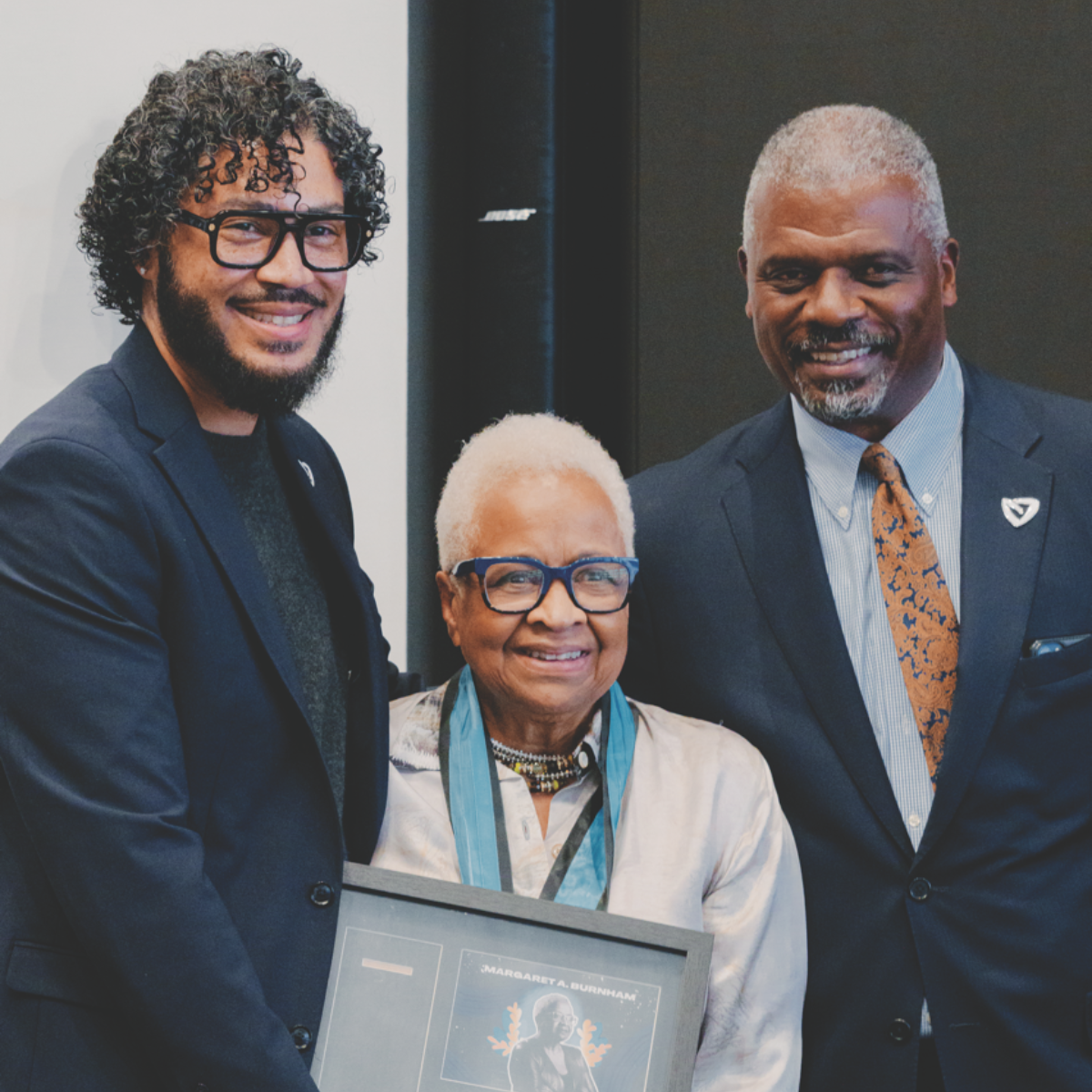
In April, Professor Margaret Burnham’s colleagues, students and fellow travelers came together for a symposium to honor that work, celebrate Burnham’s retirement and recommit to carrying the torch forward.
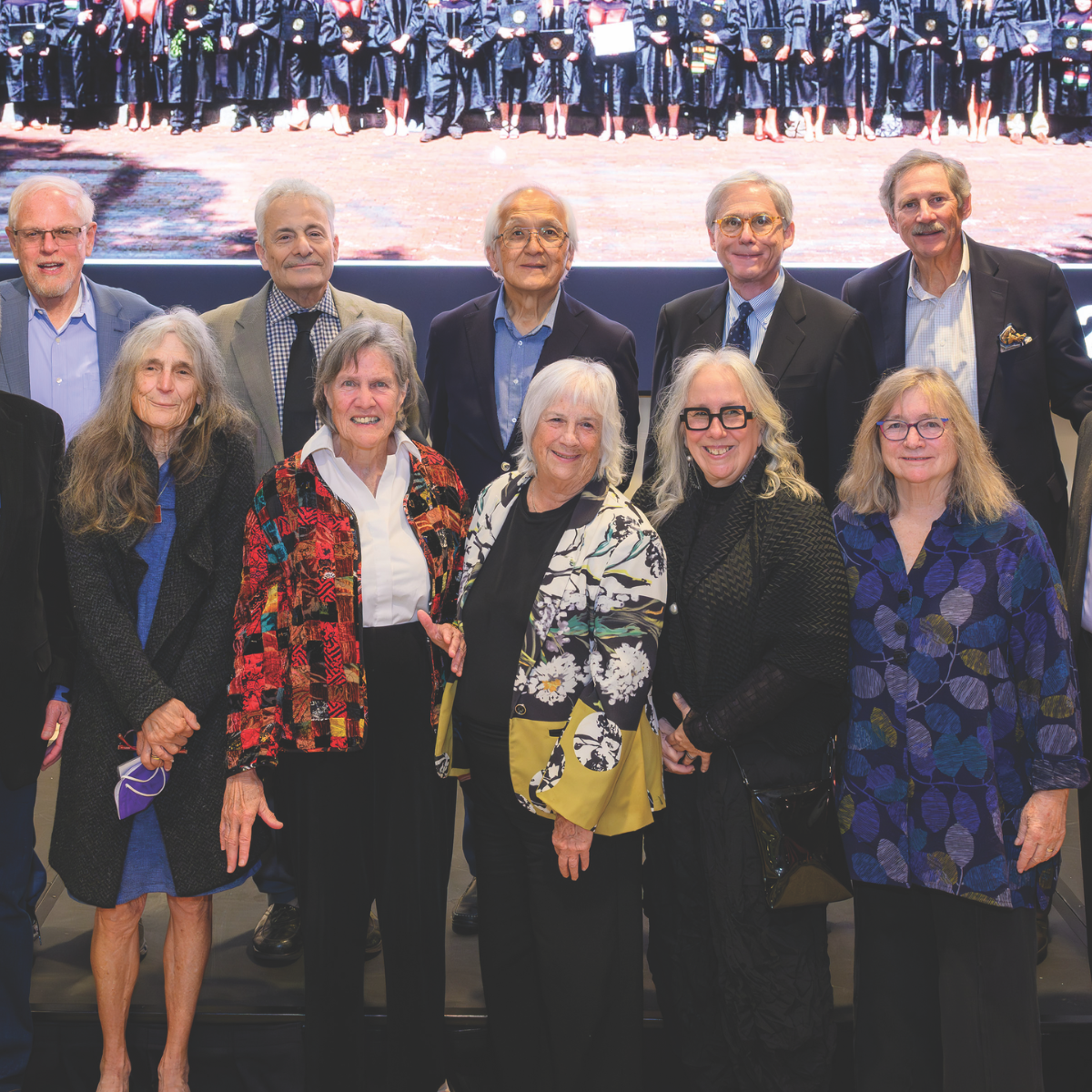
More than 200 graduates came to campus — ready to reminisce, reconnect and rediscover what made life on Huntington Avenue unforgettable.